
Nature journaling. Recycling. Composting. Native plants. Outdoor learning spaces and school gardens. Food recovery.
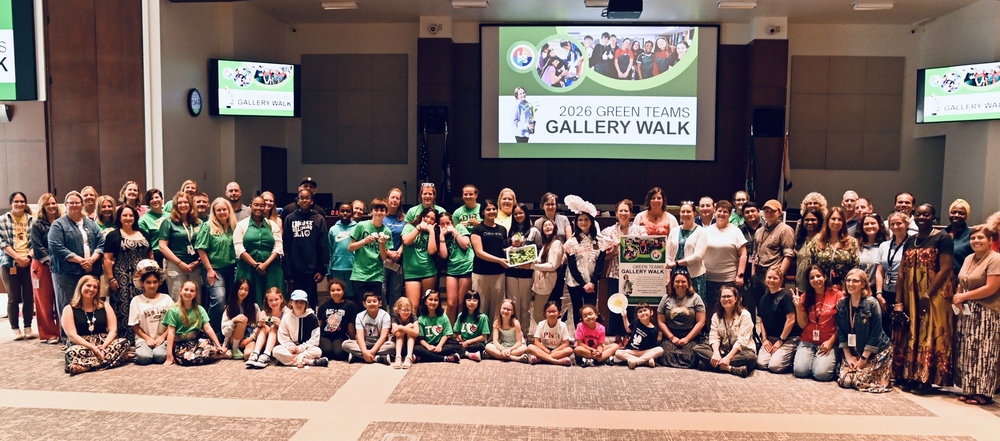
All of these topics and more were showcased at the 2nd annual Green Teams’ Gallery Walk on May 27 in the LCPS Administration Building. Participation in the Green Teams program, which is supported by the LCPS Office of Sustainability, grew significantly this year. Sixty schools participated in the program, up from 25 schools in the program’s inaugural year.
The goal of the Green Teams program is to spark curiosity and inspire action around environmental stewardship. Ultimately, the program aims to help educators weave sustainability concepts into everyday instruction, empower students to tackle real‑world challenges and deepen their connection to the natural world.
Below are some highlights from Green Team schools’ project presentation as shared at the Gallery Walk:
The Kenneth W. Culbert Elementary’s Green Team presentation featured samples of salads made from vegetables grown in the school's vegetable and herb garden. Green Team Lead Meg Miles explained how the garden brought together students from all grades to plant and grow a variety of vegetables, including lettuce, kale, peas, carrots, radishes and Swiss chard. Third-grade teacher Michelle Johnson said the garden helped students learn about gardening and reinforced the school’s theme of belonging, with every student having a place and a role in the garden. The hands-on experience of planting seeds and tending the growing plants gave the students a strong sense of ownership and helped them build awareness of where their food comes from, connecting directly to a farm‑to‑table unit in the language arts curriculum.
Potowmack Elementary’s Green Team project centered on student‑led composting, with Student Council Association (SCA) members visiting classrooms each week to collect food scraps and teaching peers about composting. Rachel, a Potowmack 4th grader, helped with compost collection, saying it was both smelly and educational to see what students threw away. The team also worked on garden clean‑up efforts and a winter milk‑jug planting project. They also partnered with a Boy Scout who restored the school’s pond as part of his Eagle Scout project. Through these activities, students developed a stronger appreciation for waste reduction and environmental responsibility.
Brambleton Middle School’s Green Team, led by Benjamin Shewbridge, a Tech Ed teacher, wove sustainability into hands‑on coursework, giving students practical, real‑world skills while advancing eco‑friendly projects. Students repurposed shipping pallets to build vertical gardens, learning important lessons about recycling materials, and created container gardens for growing plants. Throughout the process, they practiced estimating material needs, developing budgets and safely repurposing resources, core components of sustainable design.
Potomac Falls High School launched its first year of Green Team participation with a wide range of student‑driven environmental activities. Led by Potomac Falls science teacher Mario Saavedra, students joined the Environmental Council Club and quickly began developing projects. One of their initiatives was a food‑recovery program in which students placed unopened packaged foods and whole fruits in a designated area for others to take. The team also organized an Earth Day celebration featuring 11 outdoor stations designed to encourage students and community members to enjoy and protect the environment. On campus, students removed invasive English ivy from a retaining wall and plan to replace it with trumpet vine, a native species that supports pollinators. PFHS students were also among the first to visit Black Oak Sanctuary, an 89‑acre property in Lucketts owned by the Loudoun Wildlife Conservancy. During the field trip, they learned about the sanctuary’s rare wetlands, vernal pools, diverse habitats and the tools used to collect environmental data.
Saavedra noted that participation was initially slow, with only four students involved at the start of the year. But as students gained exposure to hands‑on environmental work and discovered it was fun, interest grew rapidly. By the time of the Earth Day celebration in April, the club had grown to 45 students. He emphasized the importance of helping students connect with the natural world and understand the need to protect it.
“This year’s Gallery Walk filled the room with exciting projects, palpable enthusiasm and so much passion! It was impossible not to be inspired by the students and educators! LCPS Green Teams are exploring everything from gardening and composting to habitat restoration and sustainable design, and each project demonstrates how deeply they are engaged in environmental stewardship. When students learn sustainable practices through hands‑on experiences, they build lifelong habits that strengthen our schools and our communities,” said Clark Seipt, LCPS director of sustainability.
The Green Teams program will continue in the 2026/27 school year, with interested schools at any level – elementary, middle or high – encouraged to sign up by the end of September 2026. Participating schools receive funding to support Green Team inquiry and action projects.