Social-Emotional Learning (SEL)
Dr. Lindsay Orme, SEL Coordinator
What is Social-Emotional Learning?
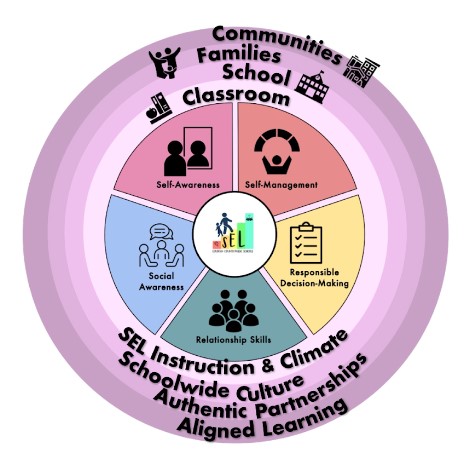
Social-emotional learning (SEL) is how children and adolescents learn and apply knowledge and skills to develop healthy identities and confidence, set and achieve goals, manage feelings, work and play with others, show empathy, make responsible and caring decisions, and solve problems. Through SEL, students are better able to learn and contribute to a positive school environment. These skills are what build foundational knowledge to support the Profile of an LCPS Graduate and career readiness skills.
Benefits of SEL
What are the benefits of implementing social-emotional learning in schools? Research has found that students participating in evidence-based SEL programs have:
Student Gains
Social-emotional skills
Improved attitudes about self, others, and school
Positive classroom behavior
Academic performance in reading and math (11 percentile-point gain)
Reduced Risks of Failure
Conduct problems
Emotional distress
What is Second Step SEL?
Adopted by LCPS in 2019, the Second Step® program is a universal, evidence-based social-emotional learning curriculum taught by in all elementary schools by classroom teachers of students in grades pre-kindergarten through fifth. Students learn and practice critical social-emotional and executive functioning skills that support student success in school while preparing them for everyday life. Second Step includes four teacher-led units, each with five to eight interactive lessons. Family communications accompany each Second Step lesson, providing lesson summaries and prompts to reinforce the learning at home.
The following units are covered in the Second Step curriculum:
Early Learning (Pre-K)
Skills for Learning
Empathy
Emotion Management
Friendship Skills and Problem-Solving
Full Scope and Sequence and Program Overview
Elementary (Kindergarten - Grade 5)
Growth Mindset and Goal-Setting
Emotion Management
Empathy and Kindness
Problem-Solving
2026-2027 LCPS Elementary Scope & Sequence
To learn more about the Second Step curriculum, view the Scope & Sequence and visit Secondstep.org.
View Second Step Elementary Sample Lessons.
Middle School (Grade 6-8)
As part of the LCPS middle school advisory program, students engage in learning and activities from a lesson series called Middle Ground. Developed locally by LCPS teachers, this curriculum is specifically designed to meet the evolving social and academic needs of our middle school learners.
Each grade level targets relevant milestones aligned with cognitive and emotional development. Grade-level overviews are listed below.
✨ 6th Grade: Students build a foundation in self-awareness, emotional literacy, and life organization. Lessons encourage exploring a sense of self, emotional regulation, and forming positive peer relationships. Themes: organization, emotional understanding, empathy, healthy relationships, basic conflict resolution
🧠 7th Grade: Students develop deeper self-awareness and social skills. Topics include building trust, advocating for themselves, managing stress, and navigating peer dynamics with confidence. Themes: growth mindset, emotional patterns, active listening, motivation, friendship dynamics, self-leadership
🎓 8th Grade: Students prepare for high school and beyond. Lessons help students explore their values and goals, strengthen leadership and self-management skills, and make thoughtful decisions about their future. Themes: personal values, emotional intelligence, digital responsibility, boundary-setting, mentorship, legacy building.
To view the full lesson series, please see the linked scope and sequence below.
2026-2027 LCPS Middle School Scope & Sequence
High School SEL
LCPS has not adopted Second Step or other curriculums to teach SEL in high schools, yet there are many
ways schools are addressing social-emotional learning and mental wellness through school-wide campaigns
and classroom lessons, including: School Counseling Lessons and Advisory Lessons; Sources of Strength
and other student leadership groups; and Positive Experiences in Educational Relationships (PEER).
Family Curriculum Access
Families have access to viewing all lessons and family engagement materials in the Second Step Elementary and Second Step Middle School curriculums through their own Second Step account. Create your Second Step account by visiting secondstep.org and entering your school access code. For more information about your school's code, please contact your school administration. (Directions: How to Create a Second Step Account)
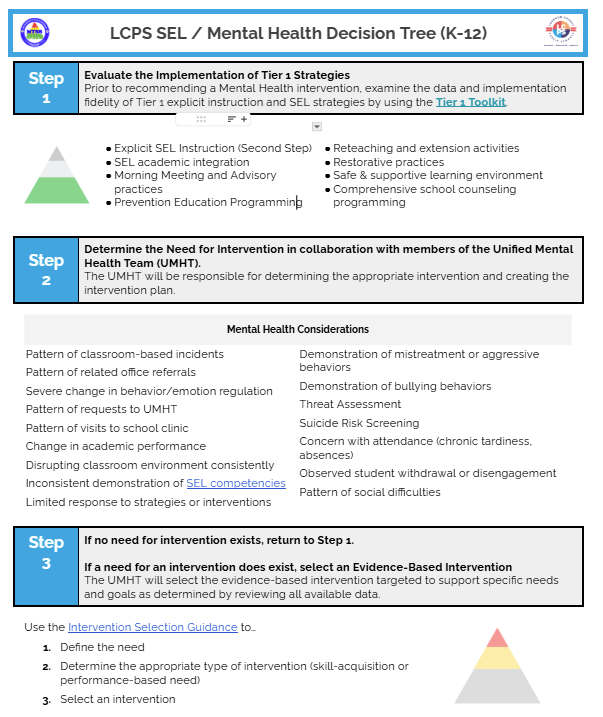
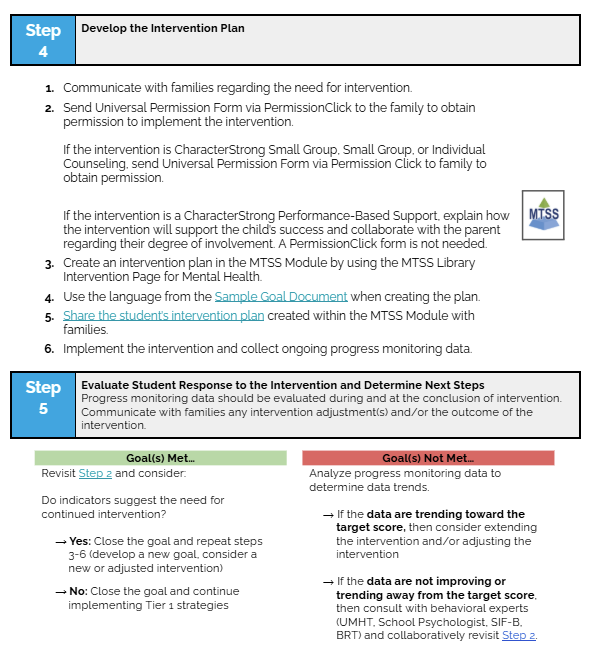
The LCPS SEL/Mental Health Decision Tree defines the decision-making process for
Evaluating the implementation of Tier 1 behavioral strategies
Aligning supports with identified student needs (in collaboration with members of the Unified Mental Health Team)
Selecting and implementing appropriate tiered levels of support, to include evidence-based interventions (UMHT)
Informing families of the need for intervention
Progress monitoring the intervention
Evaluating student response to the implemented intervention
LCPS SEL/Mental Health Decision Trees K-12 (PDF Link)